Choose timezone
Your profile timezone:
| Register for GRCon26 |
Streaming Link: https://grcon.stream
GNU Radio Conference (GRCon) is the annual conference for the GNU Radio project and community, and has established itself as one of the premier industry events for Software Radio. It is a week-long conference that includes high-quality technical content and valuable networking opportunities. GRCon is a venue that highlights design, implementation, and theory that has been practically applied in a useful way. GRCon attendees come from a large variety of backgrounds, including industry, academia, government, and hobbyists. Offering an annual program with broad appeal, GRCon attracts a variety of participants: people new to software radio who are interested in learning more, seasoned developers ready to show off their latest work, and experts who want to keep their finger on the pulse and direction of the industry.
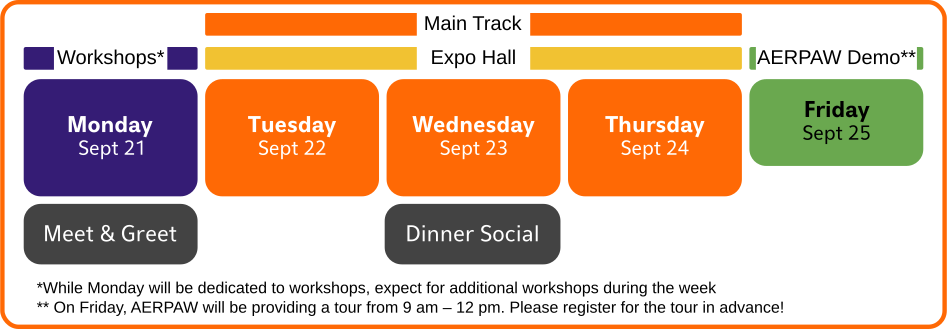
AERPAW will be hosting a field demonstration on Friday, September 25, 2026. More information here.
AERPAW will be hosting a lab tour Wednesday, 3- 5 p.m and Friday 11:30-1:30
The Lab is a 4-minute drive (909 Capability Dr #2100, Raleigh, NC 27606).
For more information and to sign up, please sign up here
GRCon26 is generously hosted by North Carolina State University (NC State), which is home to one of the four NSF PAWR platforms, the AERPAW wireless research platform.
We invite developers and users from across the GNU Radio Community to present your projects, presentations, papers, posters, and problems at GNU Radio Conference 2026.
Do you need help justifying why your manager or supervisor should send you to GRCon this year? Feel free to use this example email.
This workshop will teach the essentials of using GNU Radio 3 and how it functions. Attendees should bring a laptop if possible and install GNU Radio ahead of time as it will be hands-on.
enter code here[This was one of two workshops at GNU Radio 2024, and is currently on YouTube. According to YouTube likes, this was the more popular of the two and will be updated to demonstrate Marimo, the open-source next generation Python notebook]
Control loops are ubiquitous wherever we need to maintain or stabilize a process variable to a desired set point. In software radio, these techniques are essential to understanding receiver synchronization and stabilization. This includes carrier recovery, timing recovery and automatic gain control. The speaker, Dan Boschen, brings extensive experience in the practical mixed signal (digital or analog) control loop design of microwave synthesizers, modems, radio transceivers, and, most recently, atomic clocks.
In this live workshop, Dan will provide an overview of control loop theory sufficient for the implementing a Phase-Lock-Loop (PLL). Topics covered include:
PLL implementations in both the analog and all-digital domain will be detailed for practical use, and the modeling and simulation of control loops will be demonstrated using the free and open-source Python programming language.
This is a great opportunity for anyone wishing to get a quick jump-start on practical control loop implementations in both the digital and analog domains, and to see what Python offers for simulatimg and modeling control loops.
You can get the tools and code examples used and shown during the workshop from https://github.com/dsp-coach/grcon2026_control ; it is not necessary to have them installed to get the most out of the workshop, but if you want to follow along with the code being shown, it helps!
Artificial intelligence is rapidly reshaping the radio access network, but hands-on experimentation with AI-RAN has remained out of reach for most practitioners: commercial stacks are closed, and the gap between cellular physical-layer software and the SDR tools this community knows well is wide. This 3–4 hour hands-on workshop closes that gap using OCUDU—the open-source 5G CU/DU project that evolved from srsRAN—together with USRP hardware and GNU Radio.
Participants will build and install OCUDU on their own laptops and bring up a standalone 5G network using a USRP as a Split-8 radio unit. Using pre-provisioned SIM cards supplied by the presenters, attendees will attach real commercial smartphones to the networks they have just built; a software-UE path based on OpenAirInterface is provided for participants without compatible hardware. We will then install DeepSig's OCUDU workgroup fork featuring a GPU-accelerated PHY and examine live physical-layer metrics to see where acceleration matters in a real gNB processing pipeline. Because this is GRCon, we will then connect the cellular stack to the GNU Radio ecosystem: a ZMQ tap exposes the live uplink OFDM resource grid as a streaming source, and attendees will build flowgraphs that ingest and process real 5G uplink signals—opening the L1 of a working standards-based network to the full GNU Radio toolbox. We will conclude with demonstrations of AI-RAN in practice, including a neural-network-based PUSCH receiver running inside the GPU PHY, and discuss how attendees can train and deploy models of their own in the same pipeline.
GRCon 2026 is being hosted at the site of the AERPAW lab, whose community already builds extensively on srsRAN/OCUDU for cellular research. This workshop offers directly applicable skills to this community: attendees leave with a complete, open-source 5G AI-RAN sandbox running on their own equipment and the knowledge to extend it. The software used throughout the workshop is open source and publicly available today, including OCUDU, the GPU-accelerated PHY developed in the OCUDU hardware-acceleration working group, and the OpenAirInterface soft UE. The GNU Radio integration examples developed for this workshop will be published openly alongside the workshop materials, which will be shared as public PDFs after the conference.
GRC-Agent is a free, open-source (AGPL-3.0) AI assistant that lives inside GNU Radio Companion. It reads the contents of an open .grc flowgraph, answers questions grounded in a searchable GNU Radio block catalog and wiki docs, and edits the graph directly through agentic tool calls. It runs fully locally with an Ollama backend for privacy-conscious or offline work, or with any OpenAI-compatible API for access to larger models. GRC-Agent is centred around five key tools for inspecting, researching, troubleshooting, reasoning, and editing over flow graph contents.
In this live workshop we will cover:
Introduction to agents and agentic loops, including what an LLM agent for GRC is, and how tool-calling, validation, and self-correction work

A review of GRC-Agent's tools and the design thinking behind each, as well as how the agent harness interacts with flow-graphs.

Setting up and running your own instance, including the fully-local option

Hands-on examples: build, edit, and debug a flowgraph together with the agent, including a few one-shot examples.
Attendees should bring a laptop with GNU Radio 3.10 and Python 3.12 installed; an SDR is optional if you want to run a live radio example. We will provide setup instructions ahead of the session and a demo environment for those who prefer to watch. Recommended experience level is intermediate: familiarity with building a flowgraph in GRC is helpful, but no prior LLM or Python tooling experience is needed.
In this workshop, we will explore GNU Radio 4 from a user perspective
- How it differs from GNU Radio 3
- How to build and install
- How to create blocks
- How to create flowgraphs
- Different mechanisms for flowgraph deployment
https://github.com/altiolabs/grcon26-intro-to-gnuradio4
In this workshop we will be exploring more advanced topics of GNU Radio 4 development.
https://github.com/altiolabs/gr4-block-tutorial
Join Marc as he gives Claude access to SDRs and asks it to do weird things, while taking suggestions from the room.
Note: This is not a workshop, it's more of hang out and chat while Claude churns away at whatever mischievous tasks we give it.
GRCon Social Event open to all attendees.

Veena Misra is the MC Dean Distinguished University Professor and founding Director of the NSF Center for Advanced Self-Powered Systems of Integrated Sensors and Technologies (ASSIST). She received her Bachelor’s, Master’s, and Ph.D. from NC State University in electrical engineering in 1991, 1992, and 1995, respectively. After working at the Advanced Products Research and Development Laboratories, Motorola Inc. in Austin, TX, she joined the North Carolina State University faculty in 1998.
She has authored or co-authored over 150 papers in the areas of state-of-the-art low-power CMOS devices, power devices, alternative high-mobility substrates, nanoscale magnetics, and energy harvesting. Misra received the 2001 NSF CAREER Award, the 2011 Alcoa Foundation Engineering Research Achievement award, and most recently the 2022 Holladay Medal for Excellence. She was also named to serve on the Microsystems Exploratory Council for Defense Advanced Research Projects Agency in 2022.
In 2024, Dean Jim Pfaendtner named her as the tenth Department Head for Electrical and Computer Engineering at NC State. She was named Interim Dean for the College of Engineering in May 2026.
Capture the flag (CTF) is a competition where contestants earn points by finding secret messages ("flags") hidden in radio signals. Challenge yourself and improve your GNU Radio skills!
GNU Radio 3's Python API, while functional, leaves much to be desired for developer ergonomics. Block properties are sparsely documented in Python, forcing developers to cross-reference C++ headers to understand block inputs, outputs, and parameters. This friction-heavy workflow undermines productivity and discourages adoption.
With the arrival of GNU Radio 4, our team saw an opportunity to close this gap from the start. Rather than replicate GR3's ad hoc binding situation, we developed a code generation script that automatically discovers block metadata from GR4's C++ core and emits nanobind-backed Python data classes for every block in the standard library. The result is a Python API where block parameters, port types, and configuration options are first-class, introspectable objects fully visible to language servers and linters.
This talk walks through the design of the discovery script, the nanobind binding strategy, the tradeoffs encountered generating bindings at scale, and the developer experience improvements that motivated the work. We will demonstrate flowgraph authoring in Python with full LSP support, autocomplete, and type checking, capabilities that were effectively unavailable in GR3 and are now table stakes for modern RF development workflows.
GR4 Studio is a modern visual development environment for GNU Radio 4 that makes it easier to build, inspect, run and monitor signal-processing applications. It combines a browser based graph editor with GR4's reflected block model and a minimal control-plane architecture, allowing users to compose real GR4 graphs, configure parameters, launch sessions, and connect live visualizations to block-owned data interfaces.
This talk with introduce GR4 Studio's architecture and show how it supports multiple deployment scenarios - local desktop mode, server mode, and full in browser support via WebAssembly
The presentation will include a live demonstration of Studio's core features: building flowgraphs visually, discovering reflected GR4 blocks, editing parameters, executing flowgraph sessions, and binding UI visualizations and controls to Studio blocks. We will also discuss early performance observations, including UI responsiveness, session-control latency, and the implications of separating control-plane operations from high-rate data streaming.
Finally, the talk will outline future plans for Studio, including richer first-party visualization blocks, improved deployment packaging, expanded transport support, and tighter integration with the evolving GR4 ecosystem, while keeping the design simple, explicit, and consistent with familiar GNU Radio workflows.
TorchSig, an open-source signal processing machine learning (ML) library, is expanding into a reproducible Radio Frequency Machine Learning (RFML) framework with its most recent v2.x releases. We present an interactive workshop that covers: v2.x updates, new libraries torchsig-models and torchsig-gui, and new geolocation capabilities.
TorchSig v2.x updates include a complete restructure of the signal generation process, hierarchical metadata relationships, improved dataset writing, new dataset utilities, and structured signal generation. A significant new feature of TorchSig is its new geolocation tools–leveraging TorchSig's data generation for geospatial emitter simulation. We also showcase two new libraries, torchsig-models and torchsig-gui. TorchSig Models lets users create a full RFML pipeline, from creating synthetic datasets, augmenting and transforming data, to training a PyTorch-based detector. Additionally, we will demonstrate the TorchSig GUI, which provides an easy-to-use interface for creating TorchSig datasets.
Overall, the workshop aims to showcase ways RF engineers, ML practitioners, and researchers can use TorchSig for reproducible data generation, model development, and evaluation.
See the workshop materials here. See the workshop Github here.
In this workshop, we will demonstrate examples of GNU Radio processing blocks and/or flow graphs developed with assistance of AI engines. Blocks developed to date include a Peak-to-Average Power (PAPR) measurement block, a three-dimensional plot sink, and a source block that uses pre-existing speech-synthesis software to generate a stream of real-valued speech samples suitable for purposes such as testing modulation/demodulation and voice coding/decoding or providing audio ID for amateur radio repeaters. Further, we will provide a real-time demonstration in which we walk through the process of using AI to develop custom GNU Radio embedded Python blocks for additional applications and demonstrate them on live over-the-air signals (if receivable within the presentation venue) or recorded and/or synthesized signals if over-the-air reception is not feasible. Attendees will be encouraged to follow along and, if permitted, one or more may have the opportunity to show their developed code using the presenter audio-visual resources or a concurrent video chat. Finally, attendees will be asked to use AI to help them develop custom GNU Radio embedded Python blocks, and/or suggest blocks for AI-assisted development by the presenters. Blocks and flow graphs developed by the presenters will be made available for download and use under open-source license, e.g., GPL 3 or MIT, to be determined in coordination with the conference organizers.
GNU Radio is universally recognized as the benchmark open-source framework for Software Defined Radio. However, at its core is a high-performance DSP engine which is fundamentally hardware agnostic. By restricting our view of GNURadio to the RF spectrum, we overlook its massive potential for general-purpose test and measurement, audio processing, sensor integration, and control loop prototyping. During this workshop, attendees will explore applications of GNURadio to multi-modal sensor, and Industrial I/O (IIO) devices -- transforming the GNURadio into a versatile, low-frequency lab bench.
The workshop will use the ADALM2000 (M2K) active learning module and other boards that incorporate analog-to-digital conversion. While traditionally used as a USB oscilloscope and signal generator, the M2K’s ADCs, DACs, and digital I/O can be streamed directly into GNU Radio via the gr-iio ecosystem and libiio bindings. This integration allows users to build complex, real-time signal processing chains for baseband, audio, and sensor data without traditional RF front-ends.
Workshop Structure and Hands-On Activities
In this interactive session, attendees will learn how to interface non-SDR hardware with the GNU Radio companion (GRC) and Python out-of-tree blocks. We will walk through several practical examples, integrating a wide range of application areas, including:
Participants will leave with a broadened perspective on GNU Radio's utility. By mastering hardware integration with devices like the M2K, attendees will be able to leverage GNU Radio’s massive library of DSP blocks for hardware-in-the-loop simulations, automated test setups, and educational demonstrations far beyond the traditional SDR domain.
This workshop provides a tutorial on the RFNoC framework, including a discussion on its design and capabilities, demonstrations of several practical examples, and a walk-through of implementing a user-defined RFNoC Block and integrating it into both UHD and GNU Radio. The RFNoC (RF Network-on-Chip) framework is the FPGA architecture used in USRP devices, specifically the E310, E312, E320, X300, X310, N300, N310, N320, N321, X410, X420, X440. The RFNoC framework enables users to program the USRP FPGA, and facilitates the integration of custom FPGA-based algorithms into the signal processing chain of the USRP radio. Users can create modular, FPGA-accelerated SDR applications by chaining multiple RFNoC blocks together and integrating them into both C++ and Python programs using the UHD API, and into GNU Radio flowgraphs. Attendees should gain a practical understanding of how to use the RFNoC framework to implement custom FPGA processing on the USRP radio platform.
Orthogonal Frequency Division Multiplexing (OFDM) is the physical-layer technology behind Wi-Fi, LTE, 5G, DVB, and many other modern wireless systems. While it is often introduced through theory and mathematics, this workshop takes a different approach: participants will build and operate a complete over-the-air OFDM communication system using GNU Radio and software-defined radios.
Working in small teams with either an ADALM-Pluto or Ettus Research B210, attendees will construct an end-to-end OFDM transmitter and receiver capable of exchanging data over the air. Along the way, participants will explore synchronization, framing, FFT/IFFT processing, cyclic prefixes, pilot-based channel estimation, and equalization while observing their effects on real wireless signals.
The workshop emphasizes experimentation. Participants will transmit messages, visualize constellations and spectra, and intentionally introduce impairments such as noise, frequency offset, and multipath to see how modern receivers recover reliable communications.
By the end of the workshop, attendees will have built, operated, and modified a working OFDM radio and gained practical intuition into the DSP techniques that power today’s broadband wireless systems.
Prerequisites: Basic familiarity with GNU Radio and digital communications is helpful but not required.
Hardware setup will be provided for participants (no need to bring your own).
Space will be limited to 20 seats due to hardware limitations
Modern wireless experiments increasingly need both wideband MIMO performance and rapid software iteration, but conventional host-centric SDR streaming interfaces become fragile as bandwidth, antenna count, and slot-level control demands increase. In this talk, we present a wideband MIMO streaming platform that combines an RFSoC/USRPX410-based radio unit, a 100 Gbps Ethernet fronthaul, and a GNU Radio-facing host interface designed for deterministic timing and high-throughput experimentation. The key architectural idea is to let the FPGA own slot timing and time-critical radio actions, while the host operates asynchronously behind explicit slot-aligned buffers. On the host side, a DPDK-based controller exposes socket interfaces to external applications, and we realize this interface in GNU Radio through custom out-of-tree source and sink blocks that exchange slot-sized IQ frames without requiring GNU Radio developers to manage the fronthaul directly. The platform supports slot-scoped control of uplink/downlink mode, active layers, and RF parameters such as NCO frequency and phase, enabling dynamic experiments without continuously streaming inactive resources. We show that the system sustains 122.88 MHz baseband operation, achieves 90 Gbps fronthaul throughput using standard Ethernet packets, and maintains slot-level timing alignment with 500 ns granularity. We also demonstrate integration with GNU Radio workloads spanning wideband communication, mmWave beam sweeping, and sub-6 GHz multi-antenna sensing. Overall, this work demonstrates how GNU Radio can be integrated with modern wideband radio hardware via a reusable, high-rate streaming substrate.
As the USRP turns 21, it is also growing into new domains of wireless technology, such as new frequency bands with the USRP X420. Once again, the team behind the world's most popular SDR product family takes the stage to talk about the newest hardware products, software features, and anything else that we have been creating to enable you to build ever more powerful wireless systems.
Open-source software-defined radio (SDR) ecosystems thrive on broad hardware support. Global Navigation Satellite System (GNSS)-SDR, a popular GNSS software receiver based on GNU Radio (GR), is no different. PocketSDR front-ends are an effective alternative to generic commodity SDRs for GNSS research. PocketSDRs are specifically tuned to GNSS bands and share a common clock across multiple RF channels that enable coherent multi-band processing. In addition, they are highly cost-effective. This paper presents gr-pocketsdr, which is a GR out-of-tree (OOT) module, that enables open-source PocketSDR front-ends to operate as a GR signal source. Furthermore, we develop a GNSS-SDR adapter that enables use of the gr-pocketsdr module as a GNSS signal source. Experimental results show sustained IQ streaming at 20 Msps without sample loss and provide a real-time PVT (position, velocity, and time) solution. The source code is available at https://github.com/minhaj6/gr-pocketsdr.
Wirelessly coordinated coherent distributed antenna arrays (CDAs) provide a flexible alternative to fixed monolithic antenna arrays by allowing spatially separated radio nodes to operate cooperatively. This approach is attractive for sensing applications where a single fixed array may be costly, difficult to deploy, limited in aperture size, or vulnerable to a single point of failure. However, practical constraints still occur. Each software-defined radio (SDR) operates with its own clock and RF front end meaning each node must be coordinated precisely enough to support coherent processing. Furthermore, CDAs tend to be more sparsely distributed compared to traditional arrays. While many sensing methods rely on highly structured element spacing, Fourier-domain imaging techniques are generally more suited to sparse apertures.
In this talk, we present a fully digital, wirelessly coordinated distributed Fourier-domain imaging experiment implemented with commercially available SDRs and GNU Radio. The system builds on prior work in high-accuracy fully digital wireless coordination of time, frequency, and phase between SDR nodes, enabling coherent processing without dedicated external synchronization hardware. To perform the imaging, multiple receiver elements observe spatiotemporally incoherent broadband noise emitted from or scattered by a scene; this noise is collected and cross-correlated over many baseline pairs to form spatial frequency samples of the scene, either simultaneously in a large array, or accumulated over time by moving individual antenna elements. By accumulating samples from multiple baselines in the spatial frequency domain, the system may reconstruct an image via an inverse Fourier transform to return to the spatial domain.
We will focus on the GNU Radio runtime implementation and postprocessing software of this experiment, including the SDR control, synchronization, receive side signal processing, and the image reconstruction process. Experimental results will showcase how commercial off the shelf SDR nodes can be used for distributed coherent sensing using a two-element array to collect a diverse set of scene spatial frequencies to form an image over time. Additional focus will be on highlighting the practical challenges of moving from interferometric imaging theory to a working GNU Radio based system.
Software Defined Radio (SDR) transmitters that employ digital phase modulation can have imperfections in the transmitted waveform that either distort the intended signal or introduce undesired spurious interference. In the case of zero-intermediate frequency transmission, these impairments include amplitude imbalance between the in-phase and quadrature components, quadrature skew in the vector modulator, and local oscillator feedthrough. In the case of heterodyne transmission, where the digital modulation is applied to a carrier offset before digital-to-analog conversion, an undesired image may be present at the vector modulator output. These transmitter impairments can be observed and measured directly with a vector signal analyzer (VSA), which can also allow the engineer to visualize the digital modulation in the form of constellation plots and eye diagrams. However, if VSA equipment is not available, a series of simple periodic test signals synthesized in the SDR transmitter can allow an engineer to measure the same imperfections directly with a simple spectrum analyzer. This technique can therefore be applied in GNU Radio flowgraphs. In addition, the test signal sequence can also be used to calibrate out the effects with the introduction of predistortion in the transmitter. This further implies that the calibration process can be automated. This paper illustrates the use of a GNU Radio flowgraph in measuring and canceling out phase modulation imperfections. Emphasis is placed on binary phase shift keying (BPSK), quadrature phase shift keying (QPSK), and offset quadrature phase shift keying (OQPSK). The appropriate test signals to use for each case are identified, and the theoretical spectrum for each is derived. Examples of imperfections and the effects they have on the test signal spectrum are shown and interpreted, and the spectral analysis technique measurements are then compared to VSA results.
Contactless cardiac-related chest micro-motion can be observed through the phase modulation of a reflected continuous-wave radio signal. This paper presents a bistatic software-defined radar prototype implemented with GNU Radio and an Ettus USRP B210. The RF front end uses a fabricated dual-element microstrip patch assembly on 1.8-mm FR-4, with the transmit and receive elements operating near 5.542 and 5.533 GHz, respectively. A 9MHz transmit-receive frequency offset moves the reflected tone away from the direct-conversion DC region and is removed digitally using a frequency-translating FIR filter. The processing chain performs narrowband filtering, decimation, static-clutter suppression, phase extraction, phase unwrapping, relative-displacement conversion, and parallel respiration and cardiac-band analysis. The nominal single-element simulation produced an approximately -17-dB reflection-coefficient minimum near 5.4 GHz, a 6.58-dBi realized gain, and principal-plane 3-dB beamwidths of approximately 82-95 degrees. The paper defines a reproducible experimental protocol using static and controlled-motion targets followed by synchronized human measurements with a PPG or pulse reference. The resulting platform is intended as an open GNU Radio research testbed for micro-motion sensing rather than a clinical diagnostic instrument.
This work describes new techniques for low carrier-to-noise ratio (CNR) FM demodulation
and their implementation in GNU Radio. FM radio was developed nearly 90
years ago and is still in common use for commercial broadcasting, emergency services,
and amateur radio. They key advantage of FM over other analog modulations (i.e. AM
and SSB) is the threshold effect where received signals with a CNR above a threshold
level will be demodulated to audio signals with a signal-to-noise ratio (SNR) larger than
the CNR. However, demodulated FM signals below the threshold are subject click noise,
which rapidly degrades audio quality and intelligibility. With modern signal processing
approaches, it is possible to build practical demodulators that extend the FM threshold
to a lower CNR, thus improving communication networks that employ FM.
The presentation begins with a review of the classical theory of noise in FM receivers
based on the work of S.O. Rice[1]. Next, it covers a number of techniques for demodulation
that leverage the natural structure of FM signals in noise, including the treatment
of large noise events as erasures. Once identified, these erasures can be removed using
band-limited signal interpolation with the discrete Papoulis-Gershberg algorithm[2]. An
example result for a 1 KHz audio sine wave modulated with a 5 KHz deviation is shown
in the plot below.
Last, an example implementation of the modern FM demodulator in GNU Radio is
demonstrated and compared with commercial receivers for amateur radio communications.
Keywords: Frequency modulation, Demodulation, Threshold extension, Amateur radio, Signal
processing, Machine learning.
References
[1] S. O. Rice. Noise in FM Receivers. In Murray Rosenblatt, editor, Time Series Analysis,
chapter 25. John Wiley and Sons, New York, 1962.
[2] Paulo Jorge S. G. Ferreira. Interpolation and the Discrete Papoulis-Gerchberg Algorithm. IEEE
Transactions on Signal Processing, 42(10):2596–2606, 1994.
Wideband spectrum sensing and cost-effective RF measurement are increasingly important as wireless systems require larger volumes of clean, reliable RF data. Machine-learning methods for signal detection and classification are especially dependent on training datasets collected from realistic measurements. Commercial software-defined radios (SDRs) offer a low-cost platform for scalable data collection and controlled dataset generation, but their measurements are affected by hardware-dependent impairments such as internal leakage, IQ imbalance, frequency offsets, tuning-dependent gain variation, and band-edge attenuation. If left uncharacterized, these effects can be mistaken for real spectral activity or can distort features used by downstream sensing algorithms.
This paper presents a calibration-aware SDR sensing pipeline for accurate RF measurement and wideband spectrum sensing that optimizes operating conditions to reduce measurement distortion and normalizes receiver-dependent artifacts by applying hardware corrections before signal detection and comparison. The pipeline is evaluated using controlled over-the-air transmissions, AERPAW measurements, and laboratory spectrum analyzer references. Commercial SDRs across multiple cost ranges are compared to assess the relationship between affordability, measurement fidelity, and sensing performance.
Analysis shows that the sensing pipeline detects over-the-air signals while suppressing hardware-induced artifacts and improving agreement with reference measurements in observed frequency location and received power trends. The final evaluation quantifies frequency error, power agreement, artifact suppression, and detection and classification reliability across the tested devices, supporting the use of calibrated low-cost SDRs for trustworthy spectrum sensing experiments and RF machine-learning dataset generation.
This talk presents the next revision of our open RFSoC4x2/GNU Radio high-bandwidth SDR architecture. Earlier versions demonstrated continuous RF sample offload to a host GNU Radio pipeline at sustained rates above 70 Gbit/s, enabling GPU-accelerated inspection of up to 2.4576 GHz of instantaneous bandwidth, and later extended the design into a bidirectional QSFP-based SDR transceiver.
The current update focuses on making the platform more usable as a general GNU Radio radio front end. A key change is replacing the previous XML-RPC control path with PYNQ.remote, moving RFSoC control into a host-side Python/GNU Radio workflow while using gRPC-backed remote access for overlay loading, MMIO, and RFDC parameter control. This provides a cleaner route for changing center frequency, DUC/DDC configuration, stream routing, and monitoring without maintaining a separate board-side RPC layer.
The RFDC clocking requirements for multi-tile synchronization also motivate a wider set of runtime sample-rate modes. Rather than rebuilding bitstreams for each operating point, the design uses runtime programmable DUC/DDC settings together with a clocking wizard to expose more flexible bandwidth and sample-rate options, constrained by the synchronized RF-ADC/RF-DAC tile clocks and downstream GNU Radio processing. We are also adding a PL DDR path for short RF sample burst captures, complementing continuous 100 GbE streaming when the host cannot sustain full-rate acquisition.
The talk will share implementation status, expected limitations, and remaining engineering work needed to keep the platform open, reproducible, and useful for spectrum monitoring, radio astronomy, instrumentation, and communications prototyping.
In this talk we explore using GNU Radio and Verilator to rapidly and incrementally translate an existing flow graph into a form suitable for running in the Programmable Logic (PL) of an FPGA. Where typical FPGA toolchains take many minutes to produce a bitstream, Verilator allows us to swiftly translate our model into C++ sources that produce a cycle-accurate simulation. By integrating our Verilated model as a block directly into GNU Radio and using existing blocks as a test harness, we reduced our development cycle time from 10-30 minutes per code change to sub-second feedback. Further, by employing existing GNU Radio flow graphs as a reference implementation and comparing our results, we were able to validate algorithmic correctness before we shipped the code to the FPGA itself.
This work came from our research group's efforts to demonstrate a prototype SDR based on the Xilinx Zynq UltraScale FPGA using an Analog Devices Mixed Signal Frontend (MxFE). Specifically, in order to demonstrate the capabilities of the ZCU102 + AD9081 evaluation modules, we built a partial DVB-S2 modulation chain (QPSK encoder, physical layer framer, and pulse shaping filter) that successfully ran at 250 MSPS.
The development of robust Radio Frequency Machine Learning (RFML) systems has been constrained by the suitability of realistic training data and the lack of models trained against real-world channel effects. While recent efforts focus on precise mathematical models for RF propagation, the most accurate approach is to operate directly in the real-world electromagnetic environment. This work presents an open-source RF Environment Generator (RFEG) that enables procedurally-generated over-the-air (OTA) datasets for online machine learning training for a variety of downstream tasks. The system employs distributed USRPs controlled via GNU Radio and general purpose processor (GPP) nodes, orchestrated by a central node generating JSON-formatted signal parameter files to emulate a user-specified environment.
The RFEG implements matched filtering and time-synchronization protocols enabling precise alignment between received signals and their reference copies, which is essential for downstream RFML tasks including symbol-level information recovery, channel estimation, equalization, interference mitigation and demodulation. We demonstrate the system through OTA validation using 3 distributed USRP emitters. By providing fully open-source, reconfigurable infrastructure, the RFEG enables research groups to perform cognitive sensing research embedded in their electromagnetic environment, rather than being constrained to generic datasets that may not reflect their operational scenarios.
After briefly enumerating major enabling technologies and applications of SDR, we will describe simulations, examples, and exercises that use GNU Radio to illustrate enabling technologies and help students understand the significance of relevant parameters and explore their effects. On simulated signals, while simultaneously preparing students to use GNU Radio and low-cost SDR hardware to develop custom applications. We will describe how the approach was adapted to different course formats and also present feedback from professionals who studied software defined radio using this approach. Several examples of flow graphs used in the examples and exercises as well as flow graphs similar to the ones produced by students as part of lab exercises will be available for free download and use under open-source license, e.g., GPL 3 or MIT, to be determined in coordination with the conference organizers.
Sensor networks are increasingly required in environments where conventional radio-frequency communication is unreliable, attenuated, or unavailable. Examples include dense metallic structures, liquid-filled spaces, enclosed industrial assets, and high-multipath environments where RF propagation is strongly constrained. This paper presents a GNU Radio-based acoustic communication approach for connecting low-data-rate sensors in RF-hostile environments using an orthogonal frequency division multiplexing (OFDM) waveform with packet framing based on preamble and postamble detection.
The proposed system is designed for short text and sensor-status messages rather than high-throughput data transfer. This reflects practical monitoring applications where reliability, repeatability, and environmental tolerance are more important than bandwidth. The communication chain was implemented using GNU Radio, allowing the acoustic modem to be developed, tested, and modified using software-defined radio principles. The OFDM structure supports improved robustness in multipath acoustic channels by distributing data across multiple subcarriers and using a cyclic prefix to reduce inter-symbol interference. A preamble provides packet acquisition and synchronisation, while a postamble assists with message boundary detection and validation.
Experimental work from the associated PhD research demonstrates that acoustic signalling can provide a practical alternative communication path in environments where RF links are limited or unavailable. The paper discusses the system architecture, GNU Radio implementation, framing method, acoustic channel challenges, and intended sensor-networking applications. The work contributes a practical SDR-based framework for short-message acoustic sensor communication in difficult physical environments.
We present a GNURadio out-of-tree (OOT) module for transmitting, receiving, and processing LiDAR data in real-time. The transmitter packages the data broadcasted over Ethernet from a Velodyne LiDAR in an OFDM packet. The receiver handles packet detection, alignment, carrier frequency and phase offset correction, and equalization. Finally, the demodulated packed LiDAR payload is converted to a standard XYZ format for downstream processing, such as visualization in a live 3D point cloud. The module is tested over the air on a mmWave link using 28GHz phased array antennas at the transmitter and receiver, along with USRP software-defined radios. The system is tested in a controlled indoor environment, as well as outdoors in the NSF COSMOS testbed in NYC.
GNU Radio World is an educational web-based GNU Radio 3 that includes many OOTs, example flowgraphs, IQ recordings, all without having to install a thing. It contains several new features that might be worth including in GR4. During this breakout session we will run through what GNU Radio World can do, and then dive into some discussion related to features we could add to GR4 and what that might look like, using GNU Radio World as a sandbox for experimenting with new features and UX ideas.
Example features currently live on GNU Radio World that might be worth looking at for GR4
Capture the flag (CTF) is a competition where contestants earn points by finding secret messages ("flags") hidden in radio signals. Challenge yourself and improve your GNU Radio skills!
Experimenting with new modulation schemes on bespoke modem hardware is difficult without a high-throughput interface that lets the hardware act as a software-defined radio (SDR), streaming raw IQ samples to and from GNU Radio. Lacking such an interface, the only way to validate a transmitter/receiver chain is to exchange raw binary payloads between a pair of modems over a low-throughput link, editing the hand-written Python modulation script on the modem directly whenever a change is needed. This is workable but becomes a bottleneck during iterative development, and it assumes a fluency in DSP scripting that the FPGA and hardware engineers collaborating on our in-house modem — who often need only minor adjustments for validation — do not necessarily have.
Prior approaches to coupling GNU Radio with Zynq-based hardware fall into two broad categories. One accelerates individual DSP primitives in the programmable logic (PL) while GNU Radio runs on the ARM processing system (PS). The other tethers the SoC to a host PC over a network link to act as an SDR, streaming IQ over interfaces such as TCP or UDP. Our contribution combines the strengths of both: GNU Radio runs on-device, and custom Source and Sink blocks stream IQ samples directly between the flowgraph and a custom acoustic PL front-end via direct memory access.
We extend the software-defined underwater acoustic modem developed at Florida Atlantic University Center for Connected Autonomy and AI, built around the AMD/Xilinx Zynq-7020 SoC. We detail custom Source and Sink blocks that stream IQ samples between GNU Radio, running in PetaLinux on the ARM PS, and the PL, with the high-throughput data path carried by an AXI DMA engine over AXI4-Stream and configuration handled over a separate AXI4-Lite interface. The blocks expose NCO offset, bandwidth, sampling rate, and RX gain as parameters, effectively turning the modem into an on-device SDR driven entirely from a GNU Radio flowgraph. We further describe a deployment pipeline that takes a design from GNU Radio Companion on the desktop to a running flowgraph on the modem with minimal engineering effort, and discuss how this has accelerated our modem development while making the platform approachable to a broader range of engineers and researchers. We conclude with a demonstration of our modems exchanging modulated data using transmit and receive chains built entirely in GNU Radio.
Kyttar is a chip you program by drawing a flowgraph. It is a homogeneous array of small asynchronous compute cells, and a GNU Radio flowgraph maps onto it directly: a block becomes a region of cells, and a connection becomes a route between them. The graph you draw in GNU Radio Companion is essentially the layout of the design on the silicon, so there is no separate hardware-design step to manage. placeKYT is the open-source tool that does the mapping. It reads a flowgraph, places and routes it onto the array, runs it, and sends the output back into GNU Radio through custom source and sink blocks, so from the outside it looks like ordinary GNU Radio.
The harder problem is the block library. Every Kyttar block so far has been written by an AI agent. The placeKYT source includes the block-generation workflow: the prompts, the rules an agent follows to lay a block out across cells, and testbenches that check each generated block against its GNU Radio equivalent. A running knowledge base captures what works as blocks are built, so lessons learned on one carry into the next. Running unattended, the workflow has produced and verified nine feed-forward blocks, including configurable FIR filters and an NCO, and measured each block's quantization noise against its GNU Radio floating-point original. The agent also builds multicell blocks that place automatically and adapt their shape to fit the array.
Because a design runs as cells rather than a compiled netlist or an FPGA bitstream, you can watch it work: set breakpoints, single-step the running design, and inspect any cell while the array executes. Debugging means seeing what the hardware actually does, not inferring it from a waveform.
This runs today on simKYT, a free, cycle-accurate model of the chip. A 120-cell prototype is in fabrication, with first silicon expected mid-November 2026, and the workflow does not change when it arrives. If it runs in the simulator, it runs on the board.
This workshop will demonstrate use of GNU Radio and low-cost SDR hardware such as the Pluto Plus and RTL-SDR to develop and employ multi-antenna techniques to improve signal detection. Examples will include selection diversity, equal-gain combining, maximal ratio combining, and one or more blind adaptive beamforming techniques such as the least-squares constant modulus algorithm (LS-CMA), potentially in combination with time-domain interference cancelation. Development of test harnesses and experimental scenarios for demonstration and performance characterization of these techniques will also be described. Candidate software-based approaches to synchronize low-cost single-channel receivers, such as the RTL-SDRs with 0.5 ppm frequency stability, potentially with sufficient precision to enable the above-mentioned techniques without hardware modification to the receivers, will be presented and their performance characterized using hardware/software test harnesses. Relevant blocks and flow graphs developed by the presenters will be available for download and use under open-source license, e.g., GPL 3 or MIT, to be determined in coordination with the conference organizers.
This session offers a comprehensive tutorial on using the MultiUSRP API and RFNoC API of the USRP Hardware Driver (UHD) driver to leverage USRP devices for real-time RF data streaming. Attendees will be introduced to UHD, exploring its core architecture and the functionalities of the MultiUSRP and RFNoC APIs. The tutorial includes practical examples, options to counter streaming errors, and provides suggestions to optimize data streaming rates between host and USRP devices. The MultiUSRP API, compatible with all USRP devices from B200 to X420, utilizes standard FPGA images for seamless deployment, and can be accessed via C++, Python, GNU Radio, and LabVIEW. Participants will gain a practical understanding of the MultiUSRP API and learn when to employ the more advanced RFNoC API for specific use cases.
Automatic Modulation Classification (AMC) is an important part of next-generation cognitive radio
networks. However, real-time deployment at the network edge remains challenging because of channel
impairments and overlapping signals. This paper presents an efficient multi-modal deep learning
framework integrated into GNU Radio for robust real-time AMC.
Using TorchSig, we generate a comprehensive dataset that includes realistic wireless channel impairments
for both single-signal and overlapping multi-signal scenarios. The proposed framework combines two
feature extraction models: a 1D Convolutional Neural Network (CNN) that learns temporal features from
raw I/Q samples and a 2D CNN that extracts spatial features from signal spectrograms. To improve
classification under changing channel conditions, a decision-level fusion classifier combines the
probability outputs of both models together with real-time Signal-to-Noise Ratio (SNR) estimates for
adaptive multi-label classification.
The complete framework is optimized using ONNX Runtime and deployed as a custom GNU Radio block
for real-time over-the-air testing with Software Defined Radios (SDRs). Experimental results show that
combining temporal and spatial features with an SNR-aware fusion classifier improves classification
accuracy, especially in low-SNR and overlapping signal scenarios. By keeping the individual models
lightweight, the proposed framework also achieves high-throughput, resource-efficient inference suitable
for edge devices.
FISSURE is an open-source RF framework built around GNU Radio that combines distributed sensing, geolocation, automation, and operator-focused workflows within a unified architecture. While GNU Radio remains the foundation for signal processing and SDR operations, recent development efforts have focused on transforming RF data into actionable situational awareness through target management, alerting, artifact collection, mapping, and tactical workflows.
This presentation highlights the evolution of FISSURE from a distributed sensor node framework into a platform for coordinating RF operations across multiple sensors and users. Demonstrations and real-world examples will showcase workflows involving signal discovery, target tracking, geolocation, alert generation, artifact management, and collaborative situational awareness.
A key area of development has been the introduction of a plugin architecture that enables new protocols, sensors, geolocation techniques, and operational workflows to be integrated without modifying the core framework. This approach allows researchers and developers to rapidly extend capabilities while leveraging common infrastructure for communication, automation, data management, visualization, and distributed execution.
The talk will also discuss the development of tactical user interfaces, integration with WinTAK and ATAK through Cursor-on-Target (CoT) messaging, and the challenges and design decisions involved in adapting GNU Radio-based capabilities to support operational decision-making and shared awareness. Examples will demonstrate how SDR processing, geospatial visualization, distributed sensor networks, and tactical workflows can be combined within an extensible open-source ecosystem.
Recent work has connected large language models to GNU Radio through the Model Context Protocol, enabling natural-language flowgraph generation. These systems can build and validate flowgraphs, but they reason in open loop — the agent never observes whether its design actually works on the air — and prior efforts have found pure LLM orchestration to be sample-inefficient. We present an agentic framework that closes this loop through real radios. An LLM agent constructs transmitter and receiver flowgraphs from GNU Radio's signal-processing primitives via MCP, deploys them to software-defined radios (USRP and ADALM-Pluto), and runs automated hardware-in-the-loop tests over a controlled RF path. Measured physical-layer metrics — bit error rate, EVM, SNR, and constellation and spectrum imagery interpreted by a multimodal model — form the reward signal. The agent then reasons over these observations to iteratively reconfigure modulation, coding, filtering, and synchronization parameters, with explicit memory of which edits improved which metrics. Rather than naively driving BER to zero, the agent optimizes a constrained objective: meeting a BER target while maximizing spectral efficiency under a fixed link budget. A hybrid policy delegates continuous parameter tuning to a classical optimizer while the LLM handles structural decisions, mitigating the cost of slow hardware iterations. We report convergence behavior, iteration counts, and final link performance across modulation scenarios on physical hardware, and discuss reality-grounded feedback as a path toward autonomous, self-optimizing radios. Code and flowgraphs will be released open-source.
This talk explores the technical implementation of integrating GNU Radio into AI-native computing environments by encapsulating GNU Radio flowgraphs within an inference serving framework.
Specifically, GNU Radio flowgraphs are deployed within NVIDIA Triton Inference Server models, enabling DSP pipelines to be managed and orchestrated using the same infrastructure commonly used for machine learning inference. In this architecture, GNU Radio flowgraphs function as reusable RF signal processing components that can be reconfigured or replaced on-demand. Combined with neural network models and other Triton workloads, these components form end-to-end RF processing pipelines that integrate traditional DSP and neural network inference. We compare and contrast this approach with our previous work where AI models were embedded into GNU Radio as custom Python blocks, discussing tradeoffs in terms of reusability, reconfigurability, and overall performance.
We will describe how this capability has been integrated into Deepwave's AirStack Edge platform, where SDR processing pipelines can be deployed, configured, and controlled through a Model Context Protocol (MCP) interface. Rather than exposing low-level GNU Radio operations such as block creation and graph reconfiguration, AirStack Edge exposes workflow-level configuration and control interfaces through MCP, allowing agents to configure and operate SDR pipelines without modifying their underlying topology. This architecture enables LLM-based agents to discover, configure, and execute SDR workflows through natural-language interactions while maintaining a secure, well-defined execution environment.
Finally, we demonstrate a live, real-world implementation showcasing an autonomous agent using natural language to orchestrate a GNU Radio flowgraph on a remote sensor, perform complex RF AI inference, and report results back to a central platform.
With the increasing use of unmanned aerial vehicles (UAVs) such as drones, ensuring the security and integrity of such systems has become increasingly important. Current regulations require drones to broadcast Remote ID messages containing information such as the drone's location, velocity, and control station position, intended to be used for identification and situational awareness. However, because Remote ID messages are unencrypted RF broadcasts, they may be vulnerable to spoofing or falsified-data injection attacks.
In this work, we investigate methods for detecting Remote ID spoofing. Preliminary simulation results indicate that a UAV transmitting falsified location information can be detected by comparing received signal strength measurements with the location reported in its Remote ID broadcast. By further extracting RF characteristics from a drone's transmitted signal using GNU Radio, we aim to identify discrepancies between the broadcasted and actual UAV locations. Techniques such as received signal strength indicator (RSSI), Doppler shift estimation, and angle of arrival (AoA) analysis are explored as means of verifying the authenticity of the broadcasted message.
To evaluate these techniques, SDR-based drones systems are implemented for real-time capture and processing of drones Remote ID transmissions. By combining multiple RF-based measurement techniques, the system aims to provide an independent method for validating the physical location of a transmitting UAV against its reported telemetry data. This work is intended to contribute toward more secure and reliable UAV identification systems by exploring practical methods for detecting spoofed Remote ID broadcasts in real-world environments.
GPU programming in the legacy gr-cuda custom buffer OOT meant writing C++, plus synchronization code in every block's work(). An upgrade to gr-cuda now lets you write ordinary Python blocks that call cp.* instead of np.*, with buffers handed to them as CuPy arrays already resident in device memory, with no data copies, and nothing for the user to manage. This talk shows how the gr-cuda API got that small: synchronization moved out of blocks and into the buffer using CUDA events, and a double-mapped virtual memory ring buffer along the lines of GNU Radio's CPU version. The result is Python CuPy blocks that benchmark within 5% of hand-written C++ CUDA blocks, and Host <-> Device data transfer rates that saturate PCIe bandwidths using GNURadio 3.
https://github.com/cascade-space-co/gr-cuda
While digital video codecs have been nearly universally adopted in media transmission systems, there remain some characteristics and applications in which the analog systems which proceeded them demonstrate an advantage. Notably, digital media transmission systems experience a sharp cliff in received video quality when a channel's signal to noise ratio decreases beyond a threshold. To cope with this effect, engineers who design and deploy video transmission systems either mandate less information to be transmitted (quality tradeoff) to allow for headroom on a channel, or design a mechanism for retransmissions (TCP) or recovery (SVC). Depending on the application, retransmission is not always possible (DVB) and incurs a latency cost. SVC is seldom used due to inherent coding inefficiencies introduced and sacrifices spectrum for enhancement layers which cannot be used by low SNR receivers.
While analog systems (NTSC, PAL) do not suffer from a cliff effect, in practice they rarely represent an advantage to modern systems due to the incredible compression performance of modern video codecs. An exception to this, where NTSC is sometimes deployed, is the first person viewer drone application (FPV), where latency can be paramount in challenging radio environments.
In recent years, research has been published on hybrid analog digital systems that promise not just an elimination of the cliff effect, but comparable or improved spectral efficiency compared to transmitting video codecs. Chief among this research is Softcast, a joint source-channel coding technique pioneered by Szymon Kazimierz Jakubczak at MIT in 2011. In his foundational paper, Jakubczak describes a mechanism of transmitting real-valued coefficients of a 3D DCT in the analog domain, bundled with a small amount of heavily protected metadata, featuring linear quality correlated with a channel's SNR, as well as a mechanism for bandwidth compression. Jakubczak shows that Softcast can outperform both H.264 and SVC in video PSNR at equivalent receiver SNRs, only demonstrating a disadvantage to digital transmission when a sender's modulation scheme is tightly matched to a receiver's SNR.
Despite ongoing research, the clear potential in broadcast, remotes sensing, and any application where a system has dominion over its physical layer, there have been few public deployments of Jakubczak's work. This is likely due to the historic lack of performant and readily available Softcast implementations.
Today I would like to show you softcast-rs, a free and open source implementation of Softcast I have been working on that can transmit and receive video in real time on a laptop and a software defined radio.
What if you could hear a QAM or OFDM signal? By translating RF waveform experimentation into the acoustic domain, realistic multipath, Doppler, digital modulation, and other physical-layer effects encountered in SDR systems can be explored using purpose-built open-source hardware, without the cost barrier of equivalent RF platforms. The key insight is wavelength-consistent scaling: compressing the frequency axis by the ratio of the speed of light to the speed of sound (roughly a factor of one million) maps RF waveforms into the audio band while preserving the underlying physics of propagation, reflection, and interference. SigPro Labs, LLC has developed the RadioSonic platform for this purpose.
Building on RadioSonic's introduction at GRCON 2025, this presentation reports progress since that work, focusing on recent developments in wavelength-consistent emulation of RF waveforms. This talk examines the practical challenges of using acoustics for this purpose. We’ll see (and hear!) how RF modulation behaves when observed “in slow motion,” and how conventional SDR algorithms for synchronization and demodulation perform under these conditions. As bandwidth increases, impairments familiar to SDR practitioners emerge in exaggerated form: intersymbol interference requiring equalization, carrier and timing offsets demanding synchronization algorithms analogous to those used in production SDR systems, and dramatically enhanced Doppler effects resulting from the much slower propagation speed of sound. This talk concludes by comparing where acoustic emulation faithfully mirrors RF behavior and where the analogy begins to break down.
We present gr-rt_channel_emulator, a GNU Radio out-of-tree module for position-aware, ray-tracing-assisted channel emulation with runtime updates. The module pairs GNU Radio's real-time IQ processing with NVIDIA Sionna RT as a decoupled channel-impulse-response (CIR) engine. A 3D scene in Mitsuba XML is loaded, transmitter and receiver nodes are placed at configurable coordinates, and Sionna RT computes propagation paths for a chosen carrier frequency, antenna configuration, polarization, and interaction depth. The resulting paths are reduced to a discrete complex baseband CIR and applied to the streaming IQ inside a hierarchical block built around GNU Radio's native channel model, so standard impairments — additive noise, carrier-frequency offset, timing offset, and scaling — remain available alongside the ray-traced response. Because ray tracing is far slower than the sample rate, CIR computation runs off the streaming path and updated taps are swapped in asynchronously, keeping the flowgraph real-time.
A central feature is dynamic node positioning. Transmitter and receiver coordinates update at runtime — fed to the ray tracer and delivered to the flowgraph as CIRs through GNU Radio message ports — letting the emulated channel track motion without rebuilding the flowgraph. Position streams can originate from external autonomy and robotics frameworks such as ROS or QGroundControl, enabling experiments in which mobile nodes, robots, or unmanned aerial systems move through a 3D environment while the channel is recomputed and applied to the live IQ stream.
Unlike ray-tracing-driven emulators targeting network simulators (ns-3) or cellular stacks (OpenAirInterface), and unlike testbed emulators that rely on simplified geometric models, gr-rt_channel_emulator brings full ray-traced responses natively into GNU Radio flowgraphs with autonomy-driven mobility. Each IQ stream carries its geometry, materials, carrier frequency, antenna settings, node locations, and ground-truth ray-traced taps, yielding labeled datasets for channel estimation, signal classification, RF fingerprinting, physical-layer security, and other AI-assisted PHY tasks. The module ships with ready-to-use FAU, AERPAW, and POWDER scenes and supports custom indoor and outdoor environments.
Neutral hydrogen emits radiation at a wavelength of 21 cm (1420 MHz), providing a unique probe of the large-scale structure of the Universe. Because this emission is redshifted by cosmic expansion, observations at lower frequencies allow us to map matter distribution over much of cosmic history, including epochs before the first stars formed. However, the cosmological 21 cm signal is buried beneath astrophysical foregrounds that are several orders of magnitude brighter. Detecting it requires characterizing radio telescope beam patterns with sub-percent accuracy, a challenging task.
Global Navigation Satellite System (GNSS) satellites provide an attractive calibration source for beam mapping. Their precisely known orbits, well-defined pseudo-random noise (PRN) codes, and transmissions across multiple relevant frequency bands enable accurate measurements of telescope beam patterns, including far sidelobes. Moreover, it provides an avenue for real-time beam monitoring and obtaining relative calibration between antennas.
I previously demonstrated GNSS-based beam mapping using a commercial u-blox ZED-F9P receiver, showing that beam maps with a dynamic range of up to 80 dB are achievable. While effective, commercial receivers are not a scalable solution for radio telescope arrays consisting of hundreds of antennas. To address this limitation, I am developing a beam-mapping pipeline using the open-source GNSS-SDR, which adopts GNU Radio's signal processing framework. This talk will present the implementation and preliminary beam-mapping results, discuss the advantages and challenges of GNSS-based beam mapping with software-defined radio, and outline the next steps toward scalable calibration for next-generation 21 cm experiments.
GRCon Social Event open to all attendees.
Wireless communications have long been the invisible infrastructure enabling exploration, discovery, and human connection. As humanity pushes beyond Earth’s boundaries to the stars, the ability to build reliable and scalable communication systems that are intelligent, adaptive, and resilient is becoming as important as the missions they support. Software-defined radios (SDRs) have emerged as a transformative platform for realizing this vision, enabling communication systems that can evolve alongside changing environments, mission objectives, and societal needs.
This keynote presents a personal journey through three research efforts spanning the evolution of adaptive space wireless communications over the past decade. It begins with the development of NASA Glenn Research Center’s first orbital cognitive radio experiment aboard the International Space Station, where intelligent SDR algorithms dynamically adapted communications between Earth and orbit in response to changing channel conditions and mission requirements. It then explores more recent work supporting NASA’s Artemis vision through the Mosaic 5G project, where realistic lunar propagation models and OpenAirInterface 5G were used to investigate sidelink communications for future lunar surface operations. Finally, it looks toward an emerging frontier: integrating low Earth orbit broadband satellite networks with robotic telemedicine to extend advanced medical expertise beyond traditional broadband and healthcare deserts, demonstrating how technologies originally developed for space exploration can create meaningful societal impact on Earth.
Together, these experiences illustrate the evolution of adaptive wireless systems from experimental research to mission-enabling infrastructure and, ultimately, to technologies capable of improving lives. The keynote concludes with perspectives on the opportunities and challenges that lie ahead as the wireless communications community continues to redefine what is possible, from Earth to the Moon, and beyond.
Building multi antenna systems with many RF channels is a challenge that includes multiple aspects - apart from the RF frontend, cabling, the SDR itself, it usually requires sharing clocks between SDRs.
There are many ways to do that - from only using internal references, distributing 1 PPS (1 Hz) signals, sharing 10 MHz references, all the way to sharing multi GHz Local Oscillator clocks between devices. It could even include additional synchronization signals being shared.
This talk will explain the various ways and complexities of sharing clocks and LOs as well as showing actually measured accuracies that can be achieved using some recent SDRs. It will also map those accuracies back to a few real world examples. That way - users can pick the best suitable approach and trade accuracy and clock distribution complexity.
Capture the flag (CTF) is a competition where contestants earn points by finding secret messages ("flags") hidden in radio signals. Challenge yourself and improve your GNU Radio skills!
Next to CPUs and FPGAs, it is obvious that GPUs play an important role in SDR system implementations. But how do we enable GPUs in a way that is compatible with the modular paradigm of GNU Radio?
In this talk, we shall present how Nvidia's Holoscan has approached this problem, specifically for use with Nvidia GPUs. We present joint work between NI and UT Austin in which we used Nvidia Holocan to build a high-bandwidth, real-time capable signal analysis system.
To conclude, we see which design choices from Holoscan could be useful for GNU Radio.
GNU Radio 4 (GR4) introduces a modular scheduling framework in which application-defined schedulers can replace the runtime's default. This is a powerful foundation for more predictable and performant software-defined radio. However, the framework mainly encourages customization of how blocks are distributed across worker threads. All workers share an execution loop that traverses blocks in a fixed order. Consequently, when a block runs follows from its position in that order rather than from the urgency of its work, leaving room for tighter control from a real-time perspective.
This paper presents work in progress on real-time scheduling support in GR4, built atop its modular scheduler API, with the goal of allowing latency-sensitive flowgraphs to be scheduled, and ultimately analyzed, using results from real-time scheduling theory. The order in which a worker thread serves its blocks is made a configurable policy that composes with GR4's existing schedulers. Static- and dynamic-priority policies, such as rate monotonic and earliest deadline first, respectively, are implemented on this interface. A lightweight execution tracer is also introduced, allowing detailed examination of timing behavior and scheduler overheads. Evaluation on IEEE 802.11p receiver flowgraphs demonstrate how different workloads can benefit from the right scheduling policy. This paper and the accompanying presentation discuss these motivations, connect them to the GR4 scheduler design, report the current state of this development effort, and invite feedback from the GNU Radio community.
Large passive sensing systems operate by exploiting ambient Signals of Opportunity (SoOp). This makes precise timing and frequency alignment across multiple receivers essential for extracting coherent information. The National Instruments OctoClock‑G provides a shared reference that enables such synchronisation in multi‑receiver Software-Defined Radio (SDR) platforms.
The synchronisation behaviour of Universal Software Radio Peripheral (USRP) B210 SDRs connected through an OctoClock‑G remains under‑examined in existing literature. In particular, prior work does not assess how hardware variability across devices affects collective performance, nor does it offer an open‑source framework for orchestrating and reproducing multi‑receiver measurement campaigns. This gap limits researchers’ ability to evaluate system reliability.
In this work, we investigate the synchronisation performance of eight low‑cost USRP B210 SDRs driven by an OctoClock‑G reference. Measurements are conducted in an anechoic chamber across three Wi‑Fi bands and 11 gain settings, with particular attention to the reception of differences within the Industrial, Scientific and Medical (ISM) band. Our analysis quantifies the extent to which these devices can operate coherently under controlled conditions and identifies how hardware‑level variability manifests as measurable deviations in received signal characteristics. To contextualise these findings, we additionally evaluate two USRP X410 SDRs under identical conditions, enabling a direct comparison between entry-level and enterprise-level platforms.
The results provide a detailed view of system behaviour in ideal laboratory environments and are accompanied by open‑source software and a dataset that supports reproducible multi‑receiver experiments and further data analysis. By applying the same methodology to multiple hardware classes, we establish a comparative framework that highlights performance boundaries, stability trade‑offs, and the practical limitations of SDRs which can be relevant for passive sensing systems.
Aerial Experimentation and Research Platform for Advanced Wireless (AERPAW) is the
first wireless communication research platform envisioned and built to allow studying the
convergence of advanced wireless communication technologies (such as 5G) and autonomous
drones. The platform became generally available to the public in November 2021.
AERPAW as a Batch-Mode facility. Experimenters develop experiments in the Digital
Twin and submit experiments for execution on the physical testbed once development is
complete. AERPAW operations personnel (Ops) then execute these submitted experiments
in the physical testbed environment and collect the results of the experiments as designed by
the Experimenters, which then are available for Experimenters to view and analyze back in
the Digital Twin. This tutorial introduces researchers to the AERPAW Digital Twin and its
capabilities, enabling hands-on experimentation with wireless technologies and autonomous
drones. Researchers who attend the tutorial will gain the skills to test their fundamental
research ideas in a realistic wireless testbed.
Our tutorial is designed to be self-guided and self-paced. We have prepared a Self-paced
Tutorial Environment (STE) to support participants, and it will continue to be available
even after the event so that participants can access and learn anytime. STE is identical to
the Production Environment (PE) but forms a separate, distinct substrate for practice.
https://docs.google.com/document/d/123tg3bWeEj4vb0N5VkmH82lzVUyms6_xcIzGAkmeDnQ/edit?tab=t.0#heading=h.e24fzdoagaxg
5G NR and emerging 6G systems are expected to reuse communication
waveforms for sensing, but practical demonstrations face two coupled
problems: reference signals occupy a sparse, traffic-dependent
resource grid, while non-terrestrial links introduce time-varying
delay and Doppler that degrade the coherence required by both
demodulation and sensing.
This work presents a hardware-in-the-loop ISAC prototype built with
GNU Radio, low-cost USRP B200 radios, a 5G NR base-station waveform,
and an ephemeris-driven LEO channel emulator. The receiver acquires
and tracks bulk timing and carrier motion from NR synchronization and
demodulation reference signals. After decoding the PDSCH, it
reconstructs payload symbols and combines them with reference symbols
to form a denser delay-Doppler observation for simultaneous link
operation and sensing of programmable reflected paths. A live
dashboard compares reference-only and payload-aided processing while
an emulated satellite pass changes delay, Doppler, and attenuation. We
evaluate throughput, BLER, EVM, delay and range-rate error, detection
probability, false alarms, and host processing latency using emulator
state as ground truth. The demonstration asks a practical 6G question:
can a standards-compatible 5G waveform turn NTN impairments into
useful sensing state without reserving additional sensing resources?
We conclude with the bandwidth, clock, and real-time processing limits
of low-cost SDR hardware.
Next-generation wireless networks are expected to support sensing and communication through shared spectrum, hardware, and waveforms. However, most existing integrated sensing and communications (ISAC) demonstrations are built around a specific waveform, frequency band, or dedicated sensing platform, leaving a gap between standards compliant wireless infrastructure and practical sensing implementations across multiple frequency ranges.
In this work, we present an open software-defined radio (SDR)-based experimental pathway for ISAC using existing fifth-generation New Radio (5G NR) infrastructure from sub-6 GHz to Frequency Range 2 (FR2) millimeter-wave (mmWave) operation. We introduce PolyBase, which reuses a 3GPP-compliant 5G NR downlink waveform for long-range sensing using an OpenAirInterface (OAI) gNB and USRP X410. We also introduce an FR2 platform that extends the concept of 5G-infrastructure-enabled mmWave sensing to 27.5 GHz using USRP and Sivers mmWave front-tends, with channel state information reference signal (CSI-RS)-based channel measurements and over-the-air (OTA) sensing experiments. Experimental results demonstrate simultaneous detection of multiple outdoor targets with Poly-Base and detection of a static human target in a controlled indoor FR2 environment after clutter subtraction. The resulting framework provides a practical roadmap for extending open, standards-based wireless infrastructure toward real-time, wideband, and next-generation ISAC systems.
The proliferation of advanced MIMO and phased-array systems typically requires prohibitive hardware costs and complex, proprietary software stacks. In this presentation, we introduce QuadRF, an open-source 4x4 MIMO software-defined radio development platform specifically designed for experimental phased arrays. Operating in the 4.9–6 GHz (C-band) range, QuadRF brings a novel architectural approach to high-bandwidth signal streaming by circumventing traditional USB or Ethernet bottlenecks. Instead, it utilizes the Raspberry Pi 5’s MIPI CSI-2 (camera) and DSI (display) flexible flat cable connections to stream full-duplex 8+8-bit I/Q data directly to the Pi at 5.6 Gbps.
Our talk will detail the complete system architecture, from the Lattice ECP5 FPGA processing blocks to the seamless integration with GNU Radio and SoapySDR. We will demonstrate how standard camera and display digital interfaces offer an incredibly low-latency, resilient alternative for multi-channel SDR applications, capable of sustaining hundreds of megasamples per second without sample loss.
A key focus of the presentation will be on scalability and synchronization. We will discuss the daisy-chaining mechanism that allows multiple QuadRF tiles to be connected together, sharing digital data alongside a unified clock distribution. Real-world, over-the-air results will be presented, highlighting our sub-centimeter array calibration technique that relies on an Extended Kalman Filter to measure and correct fractional sample delays and phase offsets.
Attendees will leave with an understanding of how to implement scalable, coherent phased arrays using affordable hardware and an entirely open-source ecosystem. The code, hardware schematics, and GNU Radio integration blocks are open-source and readily available to the community, paving the way for further research and innovation in accessible MIMO development.
Integrated Sensing and Communications (ISAC) is an emerging technology that enables wireless systems to support both communication and sensing functions. This paper presents a software-defined radio (SDR) proof-of-concept for detecting indoor human motion using 5G New Radio (NR) signals, with GNU Radio serving as the software platform for implementing the transceiver and signal processing. The proposed setup consists of a 5G transmitter and a dual-antenna receiver that captures both a reference signal and reflections from moving targets.
We investigate the use of 5G Synchronization Signal Blocks (SSB) and Zadoff-Chu (ZC) sequences as sensing waveforms. A simple signal processing chain is implemented to mitigate strong direct-path and static environmental signals that can obscure target reflections. The processing pipeline includes adaptive Least Mean Squares (LMS) filtering for interference suppression, background-clutter cancellation, and range-Doppler estimation using cross-correlation and FFT-based processing.
The system is evaluated through simulation, wired loopback testing, and over-the-air indoor experiments involving human movement. Results demonstrate successful suppression of dominant interference components and the generation of clear range-Doppler maps for moving targets. The implementation highlights practical design considerations and computational trade-offs for real-time SDR-based sensing.
By focusing on accessible algorithms and open-source tools, this work provides a low-complexity and reproducible framework for exploring 5G-based sensing applications in GNU Radio.
Distributed RF systems have become increasingly relevant in recent years due to the
rapid growth of technologies such as cell-free massive MIMO, satellite communication
networks, and the Internet of Things, due in part to major benefits in adaptability and
scalability. For systems such as these operating at microwave and millimeter-wave
frequencies, inter-platform synchronization is critical to ensure high performance;
however, this introduces significant clock distribution architecture challenges where
nodes are not physically connected via cables making typical low-frequency coupling of
reference oscillators between platforms is not possible.
In this talk, we outline the workflow and design process to enable CPU-offloading to an
FPGA for latency sensitive synchronization tasks, implemented using the open-source
LiteX framework on the LiteX M2SDR. First, we describe a typical coordination process
for a distributed wireless RF system as well as the software architecture required to
implement such an application. We motivate our example with a basic carrier frequency
offset implementation and demonstrate FPGA-enabled frequency compensation with a
three SDR experiment using a LiteX M2SDR, demonstrating the workflow for
customizing the LiteX gateware design in Python with Migen FHDL.
Current coherent software defined radio receivers, although on a path towards affordability for amateur radio and educational use, still have major down sides such as low bandwidth, hard to calibrate architectures, low channel count or high prices. Reviewing the state of the art in the field reveals that reusing mass produced commodity hardware by working around its intrinsic limitations is a viable path towards an affordable, high channel count, medium bandwidth coherent receiver. This masters thesis investigates the design of such a receiver using tuner ICs originally meant for low cost digital television receivers and a recently released high channel count ADC. Due to each tuner having its own local oscillator and phase locked loop, an onboard phase reference is added with the option of switching it into the receive path for auto-calibration. Before the full receiver is assembled, various subsystems are tested in advance to make sure they will perform adequately. The results shows that the phase reference splitter required for auto-calibration is able to maintain under 1% phase difference between its outputs over the entire frequency range of the receiver. It is also demonstrated that the power supply has the required accuracy and low ripple noise. Some mistakes were found in the design such as an incorrect capacitor in the power supply, an incorrect resistors in the tuner supporting circuitry and incorrect supply sequencing for the clock generator but all issues were easily resolved. Single channel reception was demonstrated showing that each channel on its own is a capable receiver with good sensitivity. Coherence was then successfully demonstrated.
https://vectorspin.dsp-coach.com/
Capture the flag (CTF) is a competition where contestants earn points by finding secret messages ("flags") hidden in radio signals. Challenge yourself and improve your GNU Radio skills!
The Lab is a 4-minute drive (909 Capability Dr #2100, Raleigh, NC
27606).
Please follow the link to this form to sign up.
https://docs.google.com/forms/d/e/1FAIpQLScwr9MYZjcMgcBkuOHDNYnQD2CRHRv_gVM9Cn84RR3HVpBdYA/viewform